
We live in a world seemingly crafted for extroverts. From the design of most of our schools to the mandatory “team-building” activities in our workplaces, there’s an unmistakable bias towards group activities and stimulating environments. However, I believe this overlooks a critical aspect of human diversity—that a significant portion of us, one out of every two to three people, naturally inclines toward introversion. This oversight deprives society of the unique contributions that introverts can offer.
From my perspective, introversion isn’t synonymous with shyness; it’s about where we draw our energy from. I find peace and rejuvenation in quieter, less stimulating environments, where solitude is not a limitation but a launchpad for creativity. Susan Cain’s TED Talk on the power of introverts was a revelation to me, highlighting the societal bias against introversion. It underscored how our institutions, designed with extroverts in mind, often compel introverts to act against their natural inclinations.
Solitude has always been, for me, a crucial ingredient for creativity. Historical figures I admire, such as Albert Einstein, J.K. Rowling, Steve Wozniak, Mahatma Gandhi, Charles Darwin, Mark Zuckerberg, Lionel Messi, Elon Musk, and Bill Gates—all introverts—exploited their natural tendency for solitude to create works and ideas that revolutionized their fields. Their stories bolster my conviction that solitude is a formidable ally in the quest for innovation.
I have nothing against extroverts, and I even admire many people with this personality type. However, after talking with a friend who shares the same personality, we concluded that what can be bothersome is when they try to force everyone to fit and behave like them.
The transition from a “culture of character” to a “culture of personality” in the West has posed challenges for introverts seeking their place. Yet, I am convinced that by embracing our introverted nature and its unique strengths, we can contribute significantly to society. Cain’s calls to action—promoting autonomy, embracing solitude, and being true to our inner selves—strike a chord with me. They serve as a potent reminder of the need to reclaim and celebrate introversion.
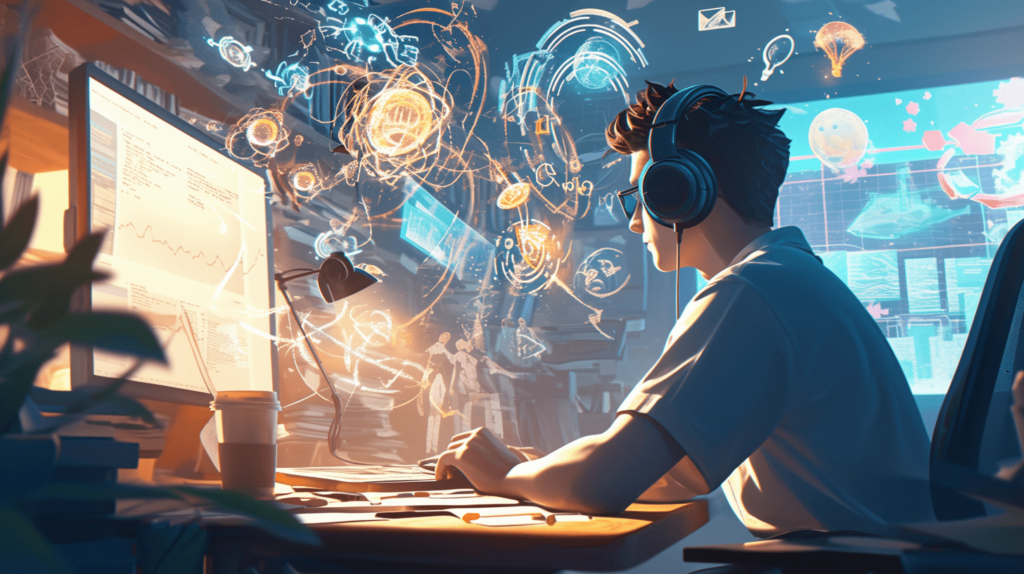
In my view, the qualities associated with introversion, such as deep thinking and a preference for solitude, can substantially fuel innovation and creativity. The narratives of introverted leaders and innovators highlight the vast potential in embracing our quieter selves. By acknowledging and valuing the differences between introverts and extroverts, we can forge more inclusive and supportive environments that nurture a wide range of talents and perspectives.
In my experience, recognizing and nurturing the talents of introverts leads to a more balanced and effective team. Actions like providing spaces for quiet reflection, encouraging written input, and acknowledging each team member’s unique contributions are invaluable. They empower individuals like myself to thrive and deliver our best work.
I have a work team where more than 90% exhibit the same introvert behavior, and by knowing how to treat them correctly, I have enabled them to excel in their work, delivering exceptional results beyond what was expected. But most importantly, they are happy collaborators and not overwhelmed by the common mistake of thinking that extroverted activities will make them happier or more identified.
On a Eric Partaker’s LinkedIn post, I saw this infographic that seemed very accurate, in case it helps with your work teams:
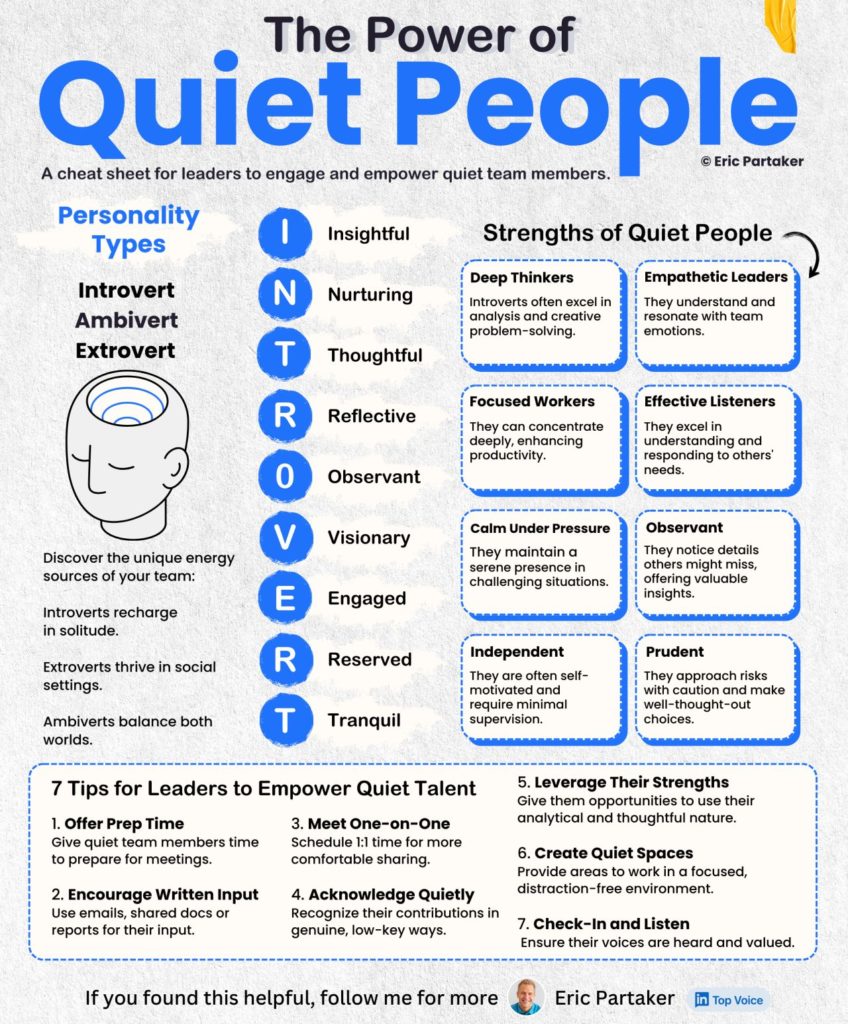
In conclusion, the world needs introverts and the unique gifts we bring. Understanding and embracing the power of introversion can inspire a culture that values deep thought, creativity, and innovation. I believe the most important thing is that anyone, whether extroverted or introverted, can read this and understand it.
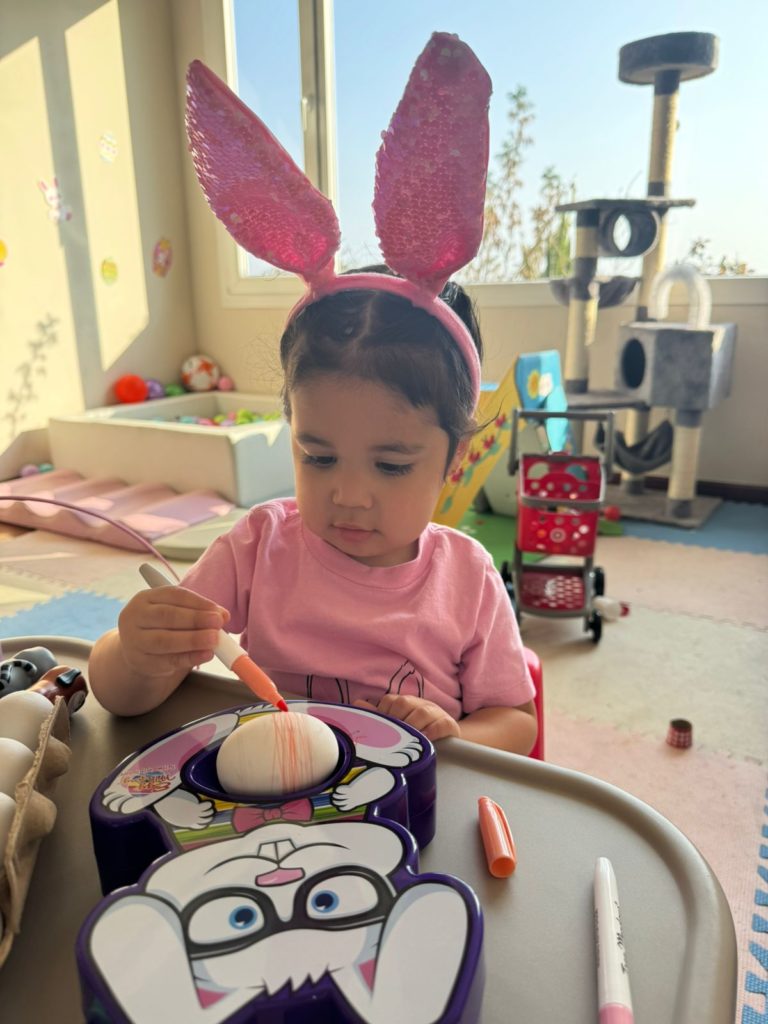
As a parent, I was fortunate to understand this early on and accept many behaviors of my daughter to fully unleash her potential without limiting her with an outdated mindset that would restrict her potential by forcing her to do things that, rather than helping, would affect her.
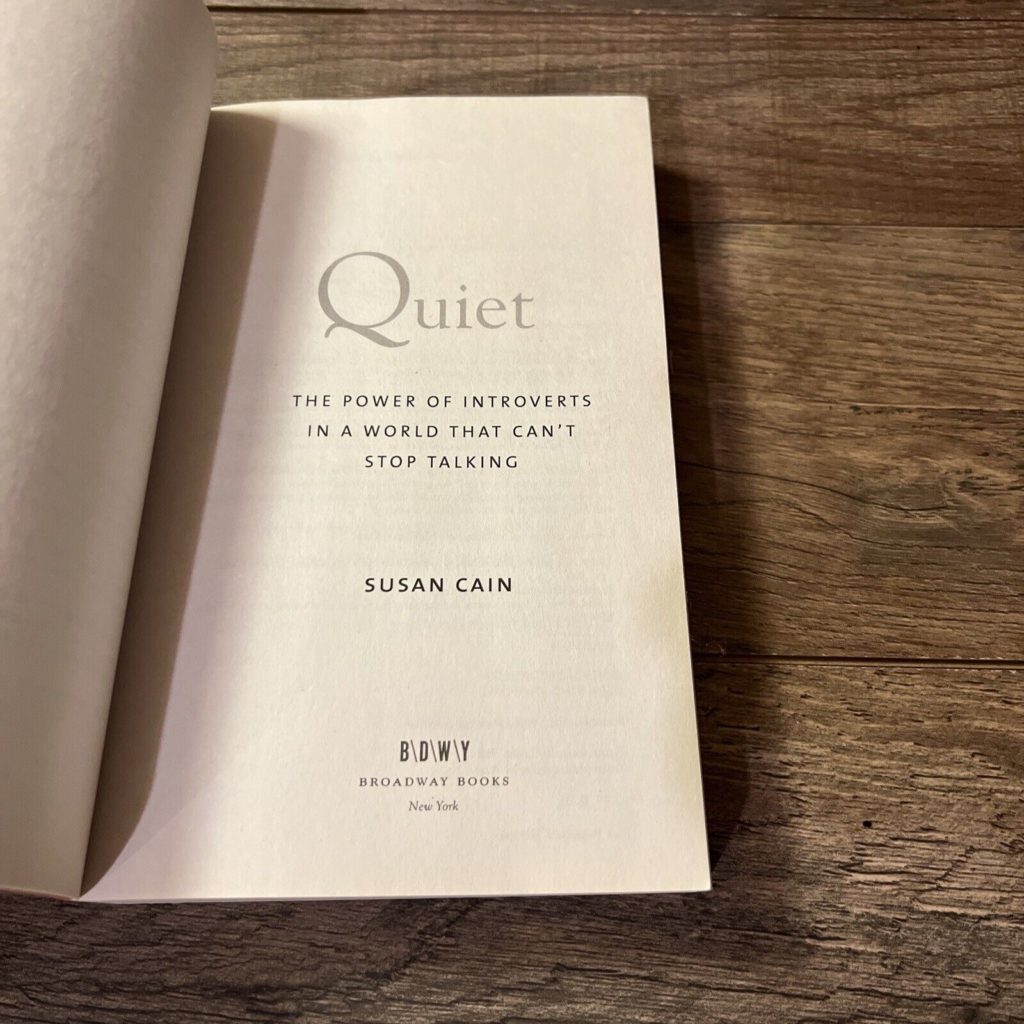
Credits to Susan Cain for inspiring me to write this, a topic I had noticed since my school days but had not heard articulated in such an organized and fact-based manner. If you wish to purchase her book, I highly recommend it; here is the Amazon link to buy it: (Quiet: The Power of Introverts in a World That Can’t Stop Talking).
PS. As a random fact, my favorite superhero, Batman, is also introverted.
Stay Hungry,

Jose Guzmán, an award-winning marketer with 15+ years’ experience, combines his passion for tech and innovation to drive revenue growth and market expansion. With a rich academic background and numerous honors in marketing, he’s deeply committed to continuous learning. In this blog, Jose shares the latest marketing trends, tips, and strategies, inspiring readers to #StayHungry for knowledge.